7 Ways the Mediterranean Diet Helps Balance Hormones
Mood swings, stubborn weight, and low energy after 35 aren’t just “getting older.” This blog breaks down 7 ways a Mediterranean-style way of eating—olive oil, fish, veggies, and fiber—helps steady hormones, calm inflammation, and support a more balanced midlife.
If your mood’s all over the place and the scale keeps creeping up even though you haven’t changed much, your body is trying to tell you something. Many women over 35 deal with hormone imbalances. But, could a simple diet change help?
It's known that diet affects our health. The Mediterranean diet is often called one of the healthiest. It includes whole grains, fruits, veggies, and healthy fats, which support hormone balance.

Adding the Mediterranean diet to your life might help your body balance hormones better. Here are 7 ways the Mediterranean way of eating can actually support your hormones.
The Hormone-Diet Connection: Why Mediterranean Eating Matters
It's important to understand how our diet affects hormone balance, which changes as we get older. Hormones control many body functions, like metabolism and reproductive health. What we eat greatly impacts hormone levels.
How Hormonal Imbalance Affects Women Over 35
Women over 35 often face hormonal shifts due to aging and lifestyle. Symptoms include mood swings, weight gain, and irregular periods. The right diet can help manage these changes.
The Science Behind Food and Hormone Regulation
The Mediterranean diet is packed with foods that help regulate hormones. Foods like omega-3s, fiber, and antioxidants keep hormones in check. Adding these to our meals supports hormone health.
To naturally balance hormones, we need a hormone-balancing diet. This means eating a variety of whole foods, like fruits, veggies, whole grains, and lean proteins. The Mediterranean diet is a tasty and lasting way to achieve hormone balance.
1. Stabilizes Blood Sugar Levels
The Mediterranean diet is key in keeping blood sugar stable. This is vital for hormone balance. It focuses on whole, nutrient-rich foods. This helps control how the body uses glucose, lowering the chance of insulin spikes and hormonal imbalances.
How Mediterranean Foods Prevent Insulin Spikes
Mediterranean foods are full of fiber, healthy fats, and antioxidants. These help slow down carb digestion and lower the glycemic load. Foods like whole grains, legumes, and veggies digest slowly. This prevents quick blood sugar rises.

The Connection Between Blood Sugar and Hormone Production
Blood sugar levels affect hormone production. High blood sugar can lead to insulin resistance. This can upset the balance of hormones like insulin, cortisol, and thyroid hormones. The Mediterranean diet helps keep blood sugar stable. This supports the right production and balance of these hormones.
| Mediterranean Food | Glycemic Index | Effect on Blood Sugar |
|---|---|---|
| Whole Wheat Bread | 30 | Low impact |
| Legumes (lentils, chickpeas) | 20-30 | Slow digestion, stable blood sugar |
| Olive Oil | N/A | Rich in healthy fats, supports glucose metabolism |
Adding these foods to your diet can help keep your blood sugar stable. This supports hormone balance, naturally balancing your hormones.
2. Reduces Inflammation to Balance Hormones Naturally
The Mediterranean diet is a great way to balance hormones naturally. It helps by reducing inflammation in the body. Chronic inflammation can mess with the body's hormonal balance, causing health problems.
Anti-inflammatory Foods in the Mediterranean Diet
The Mediterranean diet is full of foods that fight inflammation. Foods like salmon, which is rich in omega-3 fatty acids, are key. Also, fruits and vegetables are packed with antioxidants.

How Chronic Inflammation Disrupts Hormone Function
Chronic inflammation can mess with hormone production and regulation. Eating foods that reduce inflammation, like those in the Mediterranean diet, helps. This way, the body can keep its hormones in balance.
Adding anti-inflammatory foods from the Mediterranean diet to our meals is a big step. It helps reduce inflammation and supports hormone balance. Along with a healthy lifestyle, it can improve our overall health and lower the risk of hormone-related issues.
3. Supports Gut Health and Hormone Processing
The Mediterranean diet helps our gut health, which is key for balanced hormones. Our gut and hormones work together closely. The diet's focus on whole foods is vital for this balance.
The Gut-Hormone Connection
Our gut and hormones are connected. A healthy gut helps us absorb nutrients, which is important for hormone balance. Poor gut health can cause hormonal problems and health issues.
Fiber-Rich Mediterranean Foods for Digestive Health
Foods high in fiber are key in the Mediterranean diet. Whole grains, legumes, fruits, and veggies are full of fiber. They help our digestion and support good gut bacteria, which is good for hormone balance.
Essential Fatty Acids for Hormone Production
Essential fatty acids, like omega-3s, are important for hormone production. These healthy fats help our endocrine system stay healthy.
Omega-3s and Their Role in Hormone Balance
Omega-3s are good for fighting inflammation and keeping hormones balanced. They help our hormone-producing glands stay healthy.
Best Mediterranean Sources of Healthy Fats
The Mediterranean diet has lots of healthy fats. Foods like olive oil, nuts, seeds, and fatty fish are full of these fats. They help our bodies make hormones and stay healthy.
| Food | Nutrient | Benefit for Hormone Balance |
|---|---|---|
| Olive Oil | Monounsaturated Fats | Supports hormone production and overall health |
| Fatty Fish (Salmon, Sardines) | Omega-3 Fatty Acids | Reduces inflammation, supports hormone balance |
| Nuts and Seeds (Almonds, Flaxseeds) | Healthy Fats and Fiber | Supports digestive health and hormone production |
4. Provides Antioxidants and Nutrients That Support Hormone-Producing Glands
The Mediterranean diet focuses on foods rich in antioxidants. This helps fight oxidative stress, which can cause hormone imbalances. Eating whole, nutrient-dense foods supports our hormone-producing glands and keeps hormone levels balanced.
How Oxidative Stress Affects Hormone Balance
Oxidative stress happens when free radicals outnumber antioxidants in our body. This damage can harm the glands that make hormones. For example, it can mess with the thyroid, adrenal glands, and pancreas, leading to hormonal problems.

Mediterranean Diet Antioxidant Superstars
The Mediterranean diet is full of antioxidant-rich foods like berries, leafy greens, nuts, and olive oil. These foods have vitamins C and E, beta-carotene, and other compounds that fight oxidative stress. Adding these to our diet helps our body fight free radicals and supports hormone balance.
Stress-Reducing Nutrients for Adrenal Support
The adrenal glands are key in hormone production, mainly in response to stress. The Mediterranean diet offers nutrients like vitamin C, magnesium, and omega-3 fatty acids that help support the adrenal glands.
The Impact of Stress on Hormone Levels
Long-term stress can cause adrenal fatigue, affecting hormone production. Eating foods that reduce stress helps our adrenal glands and keeps hormone levels healthy.
Mediterranean Foods That Combat Cortisol Imbalance
Foods like salmon and sardines, rich in omega-3 fatty acids, help lower inflammation and support healthy cortisol levels. Foods high in magnesium, such as dark leafy greens and nuts, also aid in adrenal function and cortisol regulation.
By following the Mediterranean diet, we can support our hormone-producing glands and achieve better hormone balance.
5. How to Follow the Mediterranean Diet for Hormone Balance
The Mediterranean diet is great for balancing hormones. We'll guide you on how to make it work for you. Focus on whole foods, healthy fats, and a balanced lifestyle to support your hormone health.
The Mediterranean Plate Method: A Visual Guide
The Mediterranean plate method is easy to follow. Imagine your plate divided into sections. Half for veggies, a quarter for lean protein, and a quarter for whole grains.
Weekly Habits That Support Hormone Health
To get the most from the Mediterranean diet, try these weekly habits. Meal planning, cooking at home, and choosing your food wisely are key.
- Plan your meals around seasonal produce
- Cook at home most nights of the week
- Incorporate physical activity into your daily routine
Mediterranean Diet Food List for Hormone Balance
A Mediterranean diet includes foods that balance hormones. Here are some key foods to include:
Proteins, Fats, and Grains
| Food Group | Examples | Benefits |
|---|---|---|
| Proteins | Fatty fish, chicken, beans | Supports hormone production |
| Healthy Fats | Olive oil, nuts, seeds | Reduces inflammation |
| Whole Grains | Quinoa, brown rice, whole wheat | Provides sustained energy |
Vegetables, Fruits, and Herbs
| Food Group | Examples | Benefits |
|---|---|---|
| Vegetables | Leafy greens, bell peppers, tomatoes | Rich in antioxidants and fiber |
| Fruits | Berries, citrus fruits, apples | Supports immune function |
| Herbs | Basil, oregano, thyme | Adds flavor without salt |
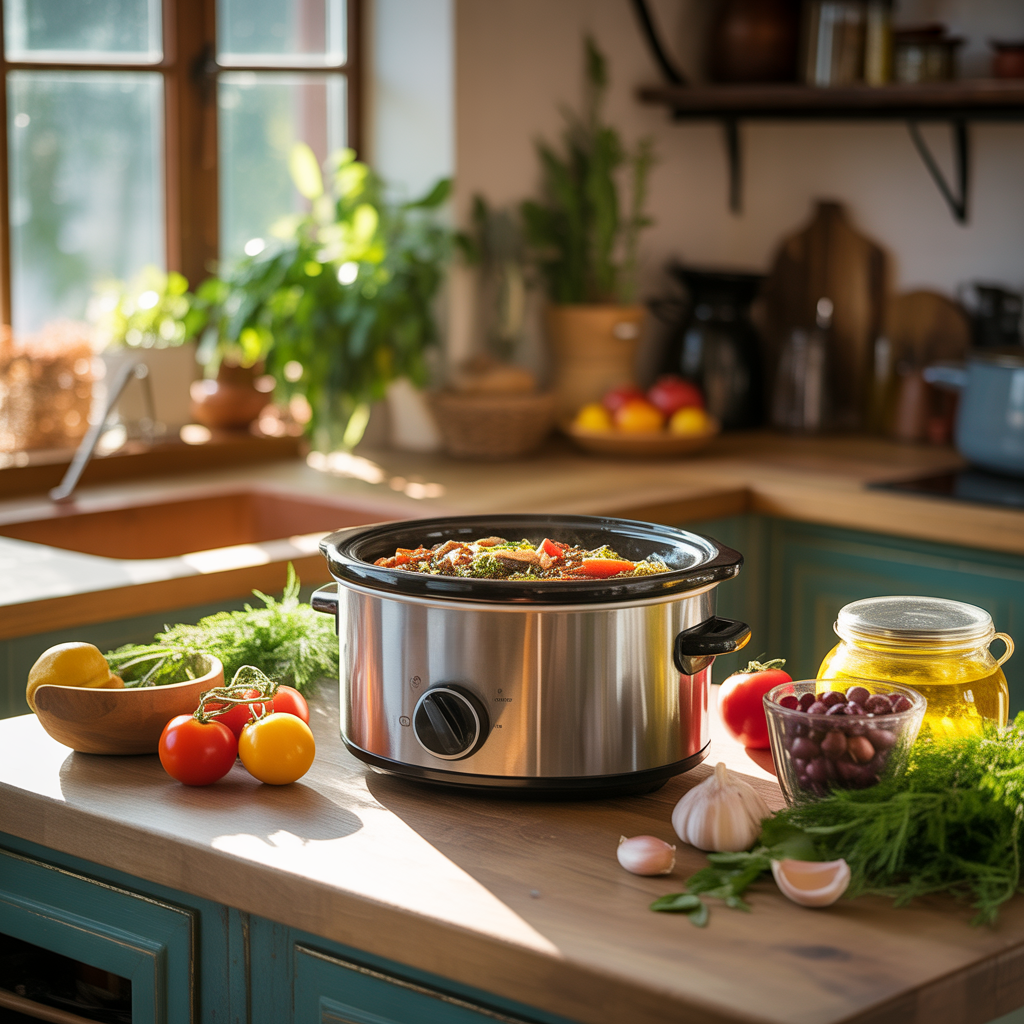
5 Simple Mediterranean Crockpot Recipes
Crockpot recipes make Mediterranean meals easy to prepare. Here are five simple recipes to start with:
Greek Chicken with Olives and Tomatoes
A classic Greek dish that's easy to make and full of flavor.
Serves: 4–6
Ingredients
- 2–2.5 lbs boneless skinless chicken thighs (or breasts)
- 1 medium red onion, thinly sliced
- 3–4 cloves garlic, minced
- 1 (14.5 oz) can diced tomatoes (with juice)
- ½ cup pitted kalamata olives
- ¼ cup chicken broth or water
- 2 Tbsp extra-virgin olive oil
- 1 tsp dried oregano
- 1 tsp dried basil (or Italian seasoning)
- ½ tsp dried thyme
- ½ tsp sea salt (more to taste)
- ¼ tsp black pepper
- Juice of ½ lemon (add at end)
- Fresh parsley or basil, chopped (for serving)
- Optional: feta cheese for topping
Instructions
- Layer the base: Add sliced onion and garlic to the bottom of the crockpot.
- Add chicken: Place chicken thighs on top in a single layer.
- Add flavor: Pour in diced tomatoes with their juice, olives, broth, olive oil, oregano, basil, thyme, salt, and pepper.
- Cook:
- Low: 6–7 hours
- High: 3–4 hours
Chicken should be very tender and easy to shred.
- Finish: 10 minutes before serving, stir in lemon juice and taste for salt/pepper.
- Serve: Top with fresh parsley/basil and a sprinkle of feta if using. Serve over brown rice, quinoa, or with roasted veggies.
Mediterranean Lentil Soup
A hearty and nutritious soup perfect for a weeknight dinner.
Serves: 6
Ingredients
- 1 ½ cups dry brown or green lentils, rinsed
- 1 medium onion, diced
- 2 carrots, diced
- 2 celery stalks, diced
- 3 cloves garlic, minced
- 1 (14.5 oz) can diced tomatoes
- 6 cups low-sodium vegetable or chicken broth
- 2 Tbsp tomato paste
- 1 tsp dried oregano
- 1 tsp ground cumin
- ½ tsp smoked or sweet paprika
- ½ tsp sea salt (to start; adjust later)
- ¼ tsp black pepper
- 2 Tbsp extra-virgin olive oil (added at the end)
- Juice of ½ lemon (at the end)
- Optional: 2 cups chopped spinach or kale (last 20–30 minutes)
Instructions
- Add base ingredients: Place lentils, onion, carrots, celery, garlic, diced tomatoes, broth, tomato paste, oregano, cumin, paprika, salt, and pepper into the crockpot. Stir to combine.
- Cook:
- Low: 7–8 hours
- High: 3½–4½ hours
Lentils should be tender but not mushy.
- Add greens (optional): In the last 20–30 minutes, stir in spinach or kale and let it wilt.
- Finish: Turn off heat, stir in olive oil and lemon juice. Taste and adjust salt/pepper.
- Serve: Great on its own or with a slice of whole-grain bread.
Slow-Cooker Ratatouille
A vegetable-rich dish that's great as a side or main course.
Serves: 6 (as a side) or 4 (as a main over grains)
Ingredients
- 1 medium eggplant, cut into 1-inch cubes
- 1 medium zucchini, sliced into half-moons
- 1 yellow squash, sliced into half-moons
- 1 red bell pepper, chopped
- 1 yellow or orange bell pepper, chopped
- 1 small onion, sliced
- 3 cloves garlic, minced
- 1 (14.5 oz) can crushed or diced tomatoes
- 3 Tbsp extra-virgin olive oil
- 1 ½ tsp dried herbes de Provence (or 1 tsp oregano + ½ tsp thyme)
- ½ tsp sea salt (more to taste)
- ¼ tsp black pepper
- Optional: ¼ cup fresh basil or parsley, chopped (at the end)
Instructions
- Layer veggies: Add eggplant, zucchini, yellow squash, bell peppers, onion, and garlic to the crockpot.
- Add sauce: Pour in tomatoes, drizzle olive oil over, and sprinkle with herbs, salt, and pepper. Toss gently to combine.
- Cook:
- Low: 6–7 hours
- High: 3–4 hours
Veggies should be soft but not disintegrating.
- Finish: Stir in fresh basil or parsley right before serving.
- Serve: As a side dish, over quinoa or brown rice, or on top of chickpeas for extra protein.
Italian Herb Turkey Meatballs
Meatballs flavored with Italian herbs, perfect for pasta or as a snack.
Serves: 4–6
Ingredients
Meatballs:
- 1 ½ lbs ground turkey
- ½ cup whole wheat breadcrumbs (or gluten-free)
- ¼ cup grated Parmesan (optional)
- 1 egg
- 2 cloves garlic, minced
- 1 tsp dried Italian seasoning
- ½ tsp sea salt
- ¼ tsp black pepper
Sauce:
- 1 (24–28 oz) jar marinara sauce (low sugar if possible)
- ½ cup water or broth
- 1 Tbsp olive oil
- Optional: extra ½ tsp Italian seasoning or crushed red pepper for spice
Instructions
- Make the sauce base: Pour marinara, water/broth, and olive oil into the crockpot. Stir in extra Italian seasoning or red pepper if using.
- Mix meatballs: In a bowl, combine ground turkey, breadcrumbs, Parmesan (if using), egg, garlic, Italian seasoning, salt, and pepper. Mix gently until just combined.
- Form meatballs: Roll into golf-ball–sized meatballs (about 1½ inches).
- Add to crockpot: Gently place meatballs into the sauce in a single layer, coating them lightly. Don’t stir heavily or they’ll break; just spoon some sauce over the top.
- Cook:
- Low: 4–5 hours
- High: 2½–3 hours
Meatballs should reach 165°F internally and feel firm.
- Serve: Over whole-grain pasta, zucchini noodles, or polenta, with extra sauce spooned over top.
Moroccan Chickpea Stew
A flavorful and aromatic stew that's a great way to enjoy chickpeas.
Serves: 6
Ingredients
- 2 (15 oz) cans chickpeas, drained and rinsed
- 1 medium onion, diced
- 2 carrots, sliced
- 1 red bell pepper, chopped
- 2 cloves garlic, minced
- 1 (14.5 oz) can diced tomatoes
- 3 cups vegetable broth
- 2 Tbsp tomato paste
- 1 ½ tsp ground cumin
- 1 tsp ground coriander
- 1 tsp smoked or sweet paprika
- ½ tsp ground turmeric
- ¼–½ tsp ground cinnamon (to taste)
- ½ tsp sea salt (to start; adjust later)
- ¼ tsp black pepper
- 2 Tbsp olive oil (added at the end)
- Juice of ½ lemon (at the end)
- Optional: ¼ cup chopped fresh cilantro or parsley
- Optional: ½ cup chopped spinach or kale (last 20–30 minutes)
Instructions
- Add everything but finishers: Place chickpeas, onion, carrots, bell pepper, garlic, diced tomatoes, broth, tomato paste, cumin, coriander, paprika, turmeric, cinnamon, salt, and pepper into the crockpot. Stir well.
- Cook:
- Low: 7–8 hours
- High: 3½–4½ hours
Veggies should be tender and flavors blended.
- Add greens (optional): In the last 20–30 minutes, stir in spinach or kale.
- Finish: Turn off heat, stir in olive oil, lemon juice, and cilantro/parsley if using. Taste and adjust salt/pepper.
- Serve: Over couscous, quinoa, or brown rice.
Your 3-Step Plan to Start Balancing Hormones This Week
Let's explore a 3-step plan to kickstart your hormone balance journey. These simple steps will help you move towards better hormonal health.
Step 1: Kitchen Clean-Out and Grocery Shop
Start by clearing your kitchen of processed and high-sugar foods. These can upset your hormone balance. Then, fill your pantry with Mediterranean favorites like whole grains, nuts, and olive oil.
- Remove processed foods and sugars
- Stock up on whole grains, nuts, and olive oil
- Choose fresh, seasonal produce
Step 2: Prep Your First Mediterranean Meals
Get ready to make simple Mediterranean dishes. Try a big salad with grilled chicken or a lentil soup with whole grain bread.
Step 3: Establish Sustainable Mediterranean Habits
To keep up with your new diet, create lasting habits. Plan your meals and cook at home. Having a weekly plan helps you stay on track to balancing your hormones.
- Plan your meals weekly
- Cook at home most nights
- Allow for flexibility and indulgences
Embrace Mediterranean Eating for Lifelong Hormone Health
Adding the Mediterranean diet to our lives can greatly help with hormone balance. It helps keep blood sugar stable, lowers inflammation, and boosts gut health. These are key for healthy hormone production.
The Mediterranean diet is packed with benefits for hormone health. It gives us antioxidants and essential nutrients. It also helps the glands that make hormones work better. By eating this way, we can feel better and avoid hormonal problems.
We suggest starting to eat better for hormone health today. Making small changes to your diet can lead to big improvements. Adopting the Mediterranean diet is a great way to become healthier and more balanced.
FAQ
What is the Mediterranean diet, and how does it help balance hormones?
The Mediterranean diet focuses on eating lots of fruits, veggies, whole grains, and healthy fats like olive oil. It helps balance hormones by keeping blood sugar stable, reducing inflammation, and supporting gut health.
How can I start following the Mediterranean diet for hormone balance?
Start by adding more fruits and veggies to your meals. Use olive oil as your main fat source. Cut down on processed foods. Try Mediterranean crockpot recipes to make cooking easier.
What are some essential Mediterranean foods for hormone balance?
Key foods include fatty fish like salmon and sardines, and veggies like broccoli and spinach. Don't forget healthy fats like olive oil and avocados. Also, eat a variety of fruits, whole grains, and lean proteins.
Can the Mediterranean diet help reduce cortisol imbalance?
Yes, it can. The diet offers stress-reducing nutrients found in fatty fish, nuts, and seeds. It also supports a healthy gut. Adding yoga and meditation can help with adrenal health.
How long does it take to see the benefits of the Mediterranean diet for hormone balance?
Seeing benefits can take a few weeks to months, depending on your starting diet and hormone imbalance. But, you'll likely notice improvements in health and hormone balance soon.
Are there any simple Mediterranean crockpot recipes I can try for hormone balance?
Yes, there are many easy recipes like Greek chicken with olives and tomatoes, Mediterranean lentil soup, and slow-cooker ratatouille. They're tasty, packed with hormone-balancing ingredients, and simple to make.
Affiliate Disclaimer
This blog may contain affiliate links, which means I may earn a small commission if you click on a link and make a purchase—at no extra cost to you. As an affiliate, I only recommend products that I personally use, trust, and believe will add value to my readers. Your support helps keep this content free and allows me to continue sharing helpful tips and resources.
I am not a medical professional, and the information provided on this blog is for educational and informational purposes only. Always consult with a qualified healthcare provider before making any changes to your skincare or wellness routine.