How Money Works for GenZ: Earn, Spend, Save & Grow It
Compound interest is your cheat code: the sooner you start, the less you need. This Gen Z guide shows how to budget, automate tiny investments, dodge high-interest debt, and let time do the heavy lifting—so future you wins without hustling harder.
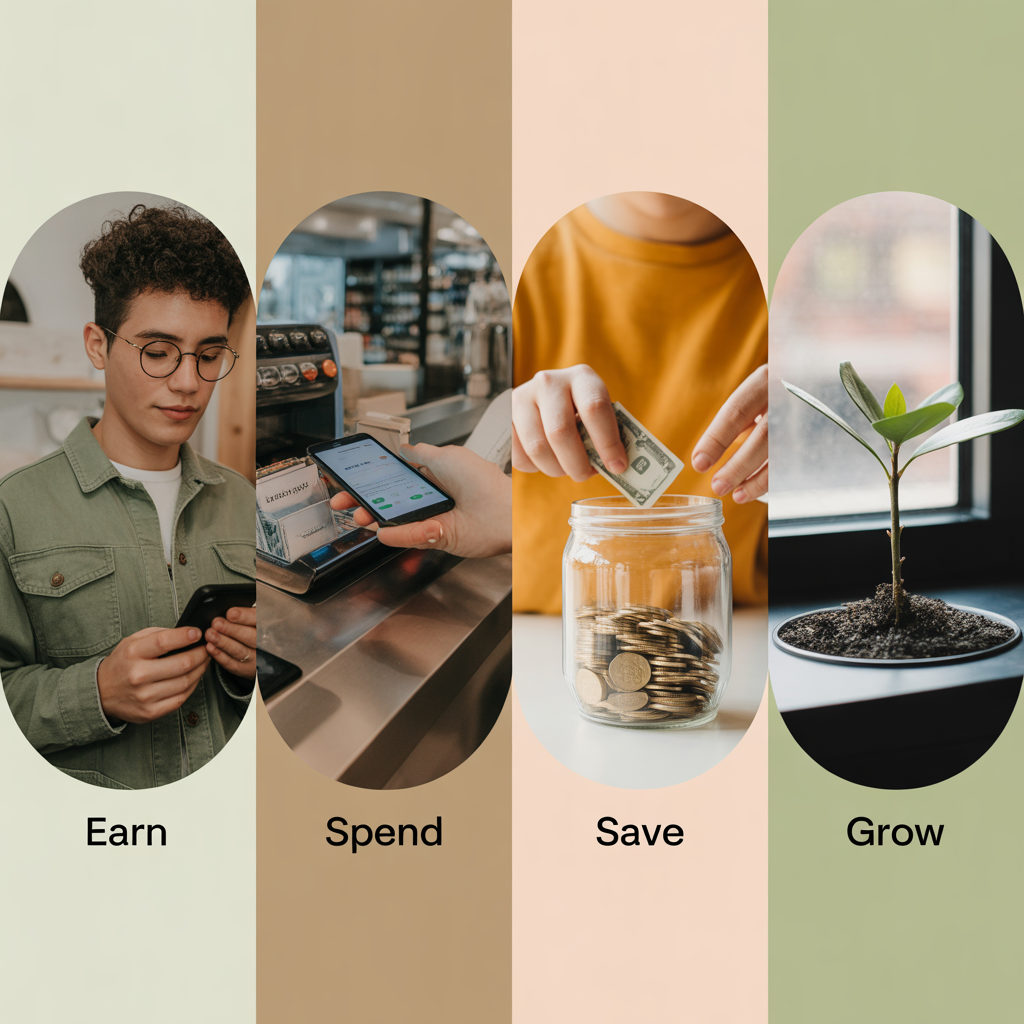
Feeling stressed about money? Yeah, that tracks. Between rent, student loans, groceries that somehow cost $80 for three things, and trying to have a life, money can feel like one long anxiety loop.
But here’s the thing: once you understand the basics of earning, spending, saving, and growing your money, it stops feeling so mysterious and starts feeling… manageable. Not perfect, but way less chaotic.

Personal finance 101 isn’t about becoming a Wall Street person. It’s about:
- Not panicking every time you open your bank app
- Making decisions on purpose instead of vibes
- Giving your future self more freedom than you have right now
By learning money basics, you give yourself options. And options are everything.
Key Takeaways
- Understanding personal finance basics is key for financial stability
- Mastering money management helps you make informed decisions
- Learning to earn, spend, save, and grow your money is essential
- Building a brighter financial future starts with taking control
- Personal finance 101 is key to achieving financial independence
The Money Reality Check: What No One Tells You
Having a big social media following is cool. But when it comes to your actual life, it’s your financial smarts that decide how stressed or free you feel.
In the real world, knowing how money works matters more than your follower count.
(You can still have both, obviously. We’re not anti-aesthetic here.)
financial education
Why Your Financial Education Matters More Than Your TikTok Following
Your financial education is the foundation everything else rests on:
- It teaches you how to handle money wisely
- It helps you avoid “I wish I’d known this sooner” mistakes
- It gives you confidence to make decisions instead of just reacting
When you understand basic financial concepts, you’re way better equipped to handle whatever the money world throws at you — job changes, emergencies, big goals, all of it.
The 7 Money Milestones That Will Shape Your Future
There are a few big money milestones that make a huge difference over time. Think of these as checkpoints on your financial journey:
- Creating a budget that actually works for you
- Building an emergency fund
- Paying off high-interest debt
- Starting to invest for the future
- Understanding your credit score
- Developing multiple income streams
- Planning for retirement
You don’t need to have all of these perfect right now. You just need to start moving through them one by one.
Learning these money management tips will put you on a path toward financial stability and long-term success—even if you’re starting from “I have no idea what I’m doing.”
Securing the Bag: Maximizing Your Income
To build a strong financial future, you can’t only think about cutting back—you also need to think about how to grow what’s coming in.
That means looking beyond just your main paycheck and asking:
- “How else can I earn?”
- “What skills do I have that people would pay for?”
- “How can I make my money situation less fragile?”
Beyond the Paycheck: Creating Multiple Income Streams
Relying on a single paycheck can feel shaky. Multiple income streams can make your life a lot more stable.
Some examples:
- Investing in things like index funds or (later) real estate
- Freelancing in something you’re good at
- Starting a small business or tiny side project
Ideas might include:
- Investing in stocks or index funds once you’ve got your basics handled
- Freelancing in your area of expertise (design, writing, editing, tutoring, coding, etc.)
- Starting a part-time business that fits around your life
You don’t need five income streams tomorrow. Just start thinking beyond “my job is my only source of money.”
Side Hustles That Actually Pay
Not every side hustle is worth your energy. Some are just time-sucking nonsense that leave you tired and underpaid.
Here are some more realistic options:
| Side Hustle | Potential Earnings | Time Commitment |
|---|---|---|
| Freelance Writing | $25-$100/hour | Flexible |
| Online Tutoring | $20-$50/hour | Flexible |
| Ride-sharing | $15-$30/hour | Variable |
The key is to find something that:
- Pays decently for your time
- Doesn’t completely wreck your mental health
- Fits with your schedule and energy level
Taxes and Benefits: Understanding What You're Actually Earning
Your take-home pay is what’s left after:
- Taxes
- Social Security/Medicare
- Retirement contributions (if you have them)
- Other deductions (insurance, etc.)

Understanding this stuff helps you:
- Know what you really have to work with
- Decide how much to set aside for taxes if you freelance
- Make smarter decisions about benefits your job offers
When you actually understand your cash flow, you can make better decisions about how to manage your money instead of just guessing.
Cash Flow 101: How Money Works in Real Life
Cash flow is just a fancy way of saying:
Money in vs. money out.
Managing your cash flow well is one of the biggest keys to financial freedom.
Money In, Money Out: Tracking Your Cash Flow
To get a handle on cash flow, you need to see:
- Where your money comes from
- Where your money goes
That means tracking:
- Every income source
- Every expense—yes, even the “just a little” ones
You can use:
- A budgeting app
- A spreadsheet
- A notes app or paper notebook
Simple steps:
- Identify your income sources
- Record every expense
- Look at your spending patterns and see what’s helping vs. hurting
Creating a Budget That Doesn't Feel Like Prison
A budget isn’t supposed to be a punishment. It’s just a plan for your money so you can still live your life and move toward your goals.
Start by:
- Sorting your expenses into needs and wants
- Prioritizing rent, food, bills, minimum debt payments, and essentials
- Then deciding how much can go toward savings, debt payoff, and fun
Tips for a budget that actually works:
- Prioritize your needs over your wants
- Set realistic financial goals (no all-or-nothing extremes)
- Adjust your budget as your life changes — it’s not carved in stone
5 Money Habits That Changed My Financial Life
Healthy financial habits are like tiny systems that quietly improve your cash flow over time. Five powerful ones:
- Paying off high-interest debt
- Building an emergency fund
- Avoiding impulse purchases as a default
- Automating your savings
- Regularly reviewing your money situation
The more you repeat these, the less chaotic your finances feel, and the more in control you become.
The Safety Net: Protecting What You've Built
Once you start saving and making good money moves, the next step is protecting what you’re building.
Your financial safety net is what keeps one bad moment from turning into a full financial disaster.

Emergency Funds: Your Financial First Aid Kit
An emergency fund is money you set aside for:
- Car repairs
- Medical bills
- Job loss or hours cut
- Other surprise expenses
The goal is to eventually have 3–6 months of living expenses saved. That won’t happen overnight, so:
- Start small: Maybe aim for $200, then $500, then $1,000
- Automate your savings: Set up transfers from checking to savings
- Keep it accessible but separate: Close enough to grab when needed, far enough that you’re not tempted to use it for random wants
Debt Management: Escaping the High-Interest Trap
Managing debt is a huge part of your safety net. Not all debt is evil—but some of it absolutely can wreck you if you’re not careful.
Good Debt vs. Bad Debt: Knowing the Difference
Good debt usually has:
- Lower interest rates
- Potential to increase your earning power or net worth
- e.g., some student loans, a reasonable mortgage, certain business investments
Bad debt is more like:
- High-interest credit cards
- Buy now, pay later that piles up
- Loans for stuff that loses value immediately
The more you understand this difference, the easier it is to make smarter calls about borrowing.
The Debt Snowball Method That Actually Works
The debt snowball method is a super popular way to pay off debt because it gives you quick wins and momentum.
Steps:
- List all your debts, from smallest balance to largest
- Pay the minimum on everything except the smallest debt
- Throw any extra money at that smallest one until it’s gone
- Move to the next smallest, repeat
Each time you knock out a balance, you get that little “I did it” hit—plus more money free to attack the next one.
Insurance 101: Protection You Actually Need
Insurance is another key part of your safety net. It’s there so one crisis doesn’t wipe you out financially.
Here are some basics:
| Type of Insurance | What It Covers | Why You Need It |
|---|---|---|
| Health Insurance | Medical expenses | Protects against high medical bills |
| Auto Insurance | Car-related damages or losses | Required by law in most states; protects against financial loss in case of accidents |
| Renter's/Home Insurance | Damage or loss to your home or belongings | Protects your assets against unforeseen damage or loss |
You don’t have to buy every insurance product people pitch you, but skipping the essentials can be super expensive later.
Level Up: Growing Your Money for Future You
Once you know how to earn, budget, and protect your money, the next level is growing it.
This is where investing and retirement accounts come in—not as a flex, but as a way to give future-you more freedom and options.
Investing Basics: Starting Small Counts
Investing doesn’t have to be complicated or only for rich people.
You can:
- Start with small, regular amounts
- Focus on simple things like index funds
- Let time and compound growth do a lot of the heavy lifting
For example:
Investing $100 a month in something that averages a 7% return over 30 years can grow to around $75,000.
You’re not just saving—you’re letting your money work for you.

Retirement Accounts: Why Starting at 22 > Starting at 32
Retirement might feel 100 years away, but this is where starting early is ridiculously powerful.
Accounts like:
- Roth IRAs
- 401(k)s (especially if there’s an employer match)
…are designed to help your money grow with tax advantages.
Example idea:
Saving $5,000 a year from age 22 to 30 can, thanks to compound growth, potentially end up being worth more than saving $5,000 a year starting at 32 and going all the way to retirement.
Same annual amount. Very different result—just because of when you start.
Financial Mistakes I Made So You Don't Have To
Learning from other people’s money mistakes is one of the easiest shortcuts you can take.
Two big mistakes to avoid:
The Cost of Having No Plan
When you don’t have a financial plan, you end up:
- Making random decisions
- Reacting to emergencies instead of being prepared
- Missing chances to get ahead
Your plan doesn’t have to be complicated. Even a basic one—like:
- “I’m paying off this card next,”
- “I’m saving this much per month,”
- “I’m working toward this emergency fund number”
…is better than nothing.
Your Money Journey Starts Today
Learning money basics is not about being perfect. It’s about giving yourself a shot at a more stable, less chaotic future.
You’ve just walked through:
- How money works for Gen Z
- Earning smarter and creating multiple income streams
- Managing cash flow and budgeting in real life
- Building a safety net with emergency funds, debt management, and insurance
- Growing your money through investing and retirement accounts
- Avoiding some of the biggest financial traps
Now it’s about doing one thing at a time:
- Set one or two money goals for your future
- Create or tweak a simple budget
- Start or add to your emergency fund
- Look for small ways to grow your income
- Take one tiny step toward saving or investing for later
Your financial journey doesn’t start when you “finally have it all together.”
It starts with the next small decision you make about your money.
Rooting for you and your wallet, always.
~Your Internet Auntie, Jill 🫶💵
Affiliate Disclaimer
This blog may contain affiliate links, which means I may earn a small commission if you click on a link and make a purchase—at no extra cost to you. As an affiliate, I only recommend products that I personally use, trust, and believe will add value to my readers. Your support helps keep this content free and allows me to continue sharing helpful tips and resources.
I am not a medical professional, and the information provided on this blog is for educational and informational purposes only. Always consult with a qualified healthcare provider before making any changes to your skincare or wellness routine.